November 2025

The beauty of the spring, summer, and early fall is obvious. The drama of the budding leaves of spring leading into the green shine of the sun through full forest in summer, ultimately ending in the annual burst of flame across the New England landscape as the trees prepare to lose their leaves. Undeniable beauty that only takes a walk outside the door to see. The beauty takes a sharper eye to find in the late fall season. The quiet gray forests and disappearing sun of November stands as a sharp juxtaposition to the full display of life in the months prior. However, if you look close enough the mundane landscape of the time in between the fire of fall and the white blanket of winter has just as much to appreciate as the seasons it’s between.
The soft shuffle of the rodents rummaging through the leaves as they collect their last feed for the winter. The shimmer of the morning sun on the first frost of the season. The evergreen landscape taking shape as the other trees rest. All but a small insight to the subtle beauties found during the end of the fall.
Now, admittedly this is mostly an active ignoring of the frigid air and the sun that can’t seem to get away from us fast enough. Living in this region of the world, the late fall is beginning of the necessary hardships of winter. As someone born on a winter morning in Keene you’d think I’d be acclimated to it by now but twenty two years in and I still can’t stand the cold; I doubt I ever will. I am appreciative during these cold nights of the roof over my head, hot food to eat, warm blankets and a soft bed to rest in. The fact of the matter is not everyone gets to enjoy those small luxuries. Unfortunately we currently live in a world where some are in a situation where they are forced to brave the elements of winter; making it through by virtue of the undying human instinct to, well, not die. Let us not forget those of us in society without, so that maybe one day we will all enter the winter season with those small comforts that allow all of us to get through it relatively unscathed.
My housemates and I were sitting at the table the night of the 11th when one of their children came running down the stairs to tell us a friend of theirs urged them to go outside. Her friend told her that the aurora was visible. As I slowly get up from my seat I’m thinking that, as most aurora sightings this low in the hemisphere have been, this would be another false alarm. Then, I hear my friend outside shout with excitement. I rush outside to see a clear green band with sprinkles of red running across the night sky. The smoldering ionosphere glistening as a mirage over the stars. There could be no better way to kick off the cold tail end of the fall season than a massive solar storm giving us a show in the sky, and it serves as a great reminder that despite the mundane nature of this season of the year, that bursts of excitement can be found - if you’re willing to step out and look for them.
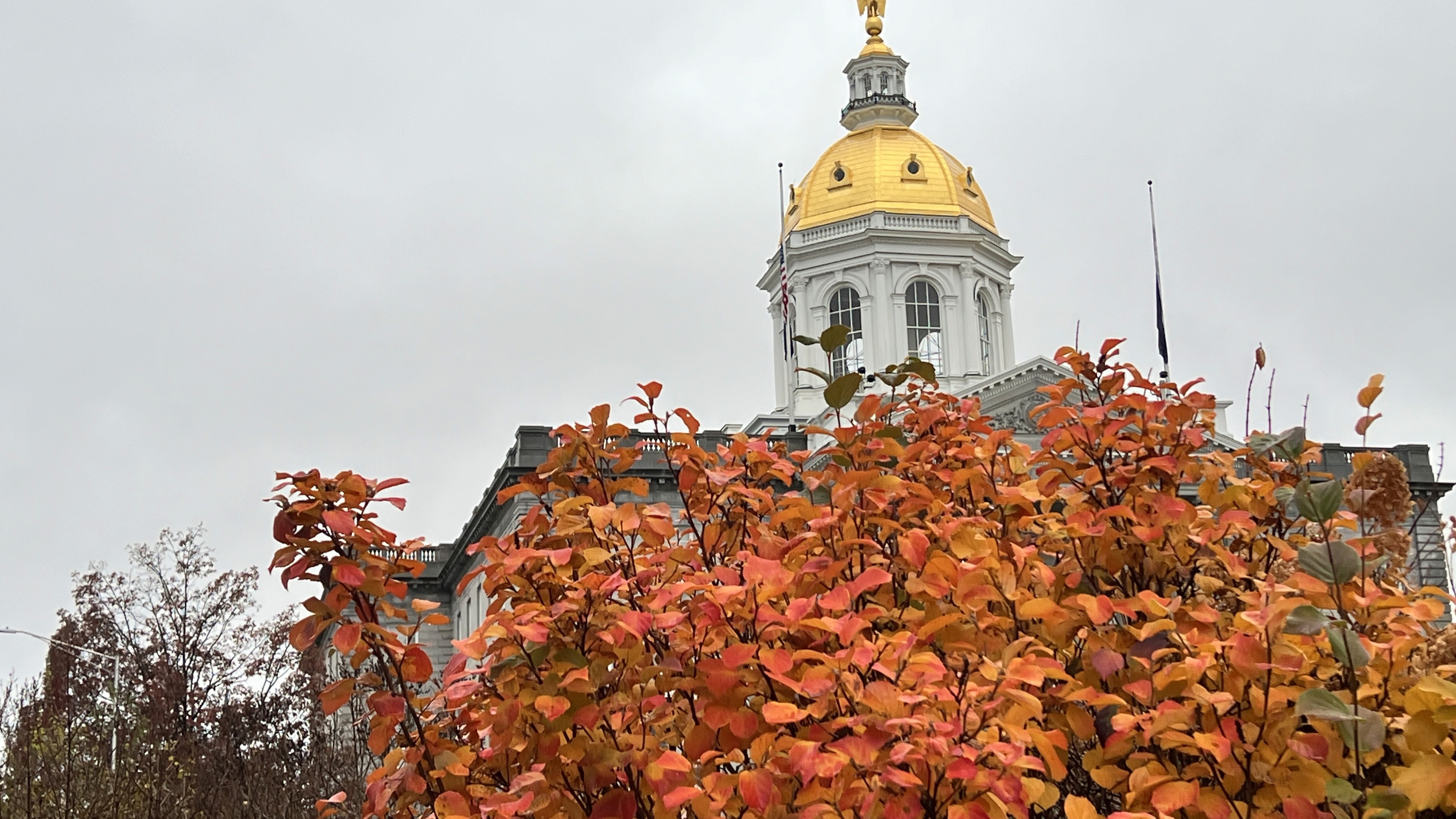
November the 21st is the deadline to sign off on all legislation proposed for the 2nd year of the 169th General Court of the State of New Hampshire. The rules of the House and Senate give it’s members one week to file a legislative service request (LSR) for the bills they wish to be proposed. During that week members contact the Office of Legislative Services by calling, using the legislative computer program, or going into the office on the first floor of the State House. Colloquially known around the State House as, OLS, the Office of Legislative Services is the office charged with processing all the legislation proposed by the members of both legislative bodies. There are six attorneys hired by the legislature to aid in the drafting of all the bills.
When a member proposes a bill during the week in September given to the members to do so, whether the member wrote it or not, it will be re-written by the drafting attorneys. Some members do still write the bills which they plan on proposing because it does make the job of the six attorneys who serve the legislative requests of four hundred and twenty four members of the legislature. Most simply contact OLS with the rough outline of an idea, often not one written down in any form. During my first term members were able to email their LSR to OLS with all but a sentence outlining the idea of the bill. This has since been adjusted because members were sending out a flurry of poorly constructed requests at the latest hours of the night.
After that week in September where members propose their LSRs to the Office of Legislative Services, those bills are then processed by the office. Processed meaning the drafting attorneys take whatever information was provided by the member who introduced the LSR and comb through the statute relevant to the bill proposed, ultimately distilling that information into the official bill template and pushing out the LSR back to the member. Who then looks at the text given back from OLS. If the text is correct according to whomever proposed it, that member approves the LSR. If the text is not written correctly to whatever the member was trying to propose, it may be brought back into drafting and rewritten to fit what’s wanted. Members have until the deadline day of Friday, 21 November to get their legislation through the drafting period.
This cycle is slightly adjusted each year by the rules committees of each body, who set the deadlines for their respective memberships’. This year the filing period was September 15th to September 19th, with the deadline on drafting being November 21st. The eleven week drafting period is also when members are allowed by the rules to seek co-sponsors for the legislation proposed. Legislation can be co-sponsored either by a member opening their bill for sponsorship, or by invitation. If opened for sponsorship, any other member who sees the bill on the list of LSRs provided after the filing deadline of 19 September may sponsor the bill. If by invitation, the sponsor of the bill must actively request a member be added to a bill before that member may co-sponsor the legislation. The latter is how it is most often done. Legislation may be sponsored by not more than 10 members of the House, and 5 members of the Senate.
After the drafting deadline in November has passed, the Offices of the Speaker and the Senate President intake all the LSRs proposed by their memberships. The Speaker and Senate President each read the bills of their membership, assigning each bill to the committee deemed most relevant to the content of the bill. Then those bills receive public hearings in those committees, a committee vote, and a vote on the floor of whichever body it was proposed. This is done through the January to April months, with all the bills that have passed each the floor of each body crossing over to the other. Again getting assigned to a committee by the leader of the body, heard by said committee, voted on by that committee, and on the floor. If passed in the second body with no amendments, it goes onto the Governor. If the second body the bill is processed through amends the bill, it goes back to it’s original body. Who has the choice to pass the bill as amended by the other body onto the Governor, call for a committee of conference, or kill the bill. This all happens within the months of April to June. If a committee of conference is called both the Speaker and the Senate President assign members from their bodies to a conference committee. This conference committee is charged with finding a unanimous position on the text of the bill. If a unanimous agreement between all members of the committee cannot be found the bill is killed. If unanimous agreement is found, the conference report goes back to each body to be approved. If approved, the bill as agreed upon by the conference committee is passed onto the Governor. This all happens within the month of June.
The legislature then takes a recess in July and August. Coming back in the fall to handle any legislation retained by the committees during the first half of the process in the winter months. Holding hearings and voting on said retained legislation at the same time as the next legislative filing and drafting period opens. With all retained legislation put onto the docket for the convening day session which falls on the first Wednesday of January every year. Normally, both bodies hold their annual veto day session during October as by that point the Office of the Governor has either vetoed or signed all legislation passed by each body. This year the House is holding it’s veto day session on December the 17th. No reason has been given for the change as far as I have heard. The Senate held it’s veto day on October the 26th, following the normal pattern. Either way, the House is set to handle eight vetoes of the Governor.
New Hampshire is special in it’s legislative process as each bill proposed by a member is guaranteed an assignment to a committee, a hearing open and promptly noticed to the public, a vote in said committee, and regardless of the outcome of that vote the bill is guaranteed a vote before the full membership of whichever body it was assigned to. Committees have the power to retain a bill during the time in which the bill is in the possession of the committee, but it has a deadline in the fall to act on retained bills and all of those bills receive a vote on convening day as I wrote in the paragraph above.
This is special because each member has the agency to shepherd whatever they were elected to serve with the only restriction being the vote it receives by the other members. In most of the other legislatures, leadership has the power to withhold legislation from even receiving a hearing before the public and committee. Meaning only that which the leadership of the body deems worthy can be heard before the legislature. Leaving the full membership without any sense of agency in their ability to carry out their responsibility to represent the constituents who elected them to serve this constitutional obligation to the State.
This entire process is set forth by the respective rules of each body, which are first heard by the rules committees but ultimately voted on by each body at the beginning of each biennium after election of both offices of leadership in the legislative branch. The rules of the House and the Senate are public, and can be found at https://gc.nh.gov/
In this my fourth year in office, I wrote seven pieces of legislation to be filed during the September filing period. Two of which I withdrew, one of which was rejected. The two which I withdrew were a bills to lower the signature amount needed to create a third party in the State, and another to create a vacation home tax. I withdrew the former towards the tail end of the drafting period because I determined I wouldn’t have the capacity to wrangle the co-sponsors, and shepherd the bill while spinning so many other plates. I do believe we should be chipping away at restructuring the election system such that other parties could grow and flourish amongst the established ones. Allowing for more options to be heard in an attempt to break the binary nature of modern American politics.
I withdrew the vacation tax because it was only proposed as a backup. I wanted to propose a surcharge tax of .75 on any non primary residence which isn’t occupied for more than 183 days of the year valued over $500k. The drafting attorney I called to propose the bill I wrote warned me that I may be proposing a bill that was close enough in content to one already proposed, going against House Rule 36-B which restricts members from proposing duplicate LSRs. Therefore I proposed both the surcharge on non-primary, and a secondary bill I had written on vacation homes. The bill on vacation homes was essentially the same bill but written different enough to be satisfactory to drafting attorney. Ultimately I won the battle of duplicates and was able to propose the surcharge bill. Which was the one more properly written to New Hampshire statute.
The bill which was rejected was my 1,234 word resolution on peace in Gaza. Rejected by the attorney who cited Rule 36-B, and the fact a member had proposed a similar enough resolution not but an hour before I had called. The text of the resolution I wrote is available to read on my website. I have it on the home page, but it can also be found under the letters section of the website.
Four of the bills I wrote made it through the gauntlet of the drafting process. Those being the surcharge tax, a constitutional amendment to abolish the legislative salary, an abutters notification for filing of the intent to harvest form, and a constitutional amendment to allow possession of a modest amount of cannabis by the citizens of the State.
I am not a legislator who drools over the prospect of proposing new taxation. Taxation is, however, a necessary piece to the society we have constructed and it’s governing structure. As I canvassed my constituency during the recess months of this year, the rising property taxes was that which I heard the most about. People throughout the State are being taxed out of the homes they grew up in. Young and working people are conceding to the notion they will never own a home. All while property in the State is bought up and held by people, and corporations, with no intentions of occupying the properties in any meaningful way. Leaving the residents in the municipalities they own property in left in the dust. I proposed a tax of a quarter of a percentage point on the value of any non-primary residence valued at over $500k, with all money raised going directly to the municipality which the taxed property resides in. I wrote the bill with an earmark to ensure all funds raised were used directly for municipal property tax relief. I didn’t want any games played with the money raised by this tax. This is an effort to provide a small amount of relief to citizens across this State while we bide our time waiting for a legislature committed to a restructuring of the broken statewide property tax system to provide genuine relief.
A $500,000 dollar home would pay $3,750 annually for this surcharge. A 5 million dollar property would pay 37.5 thousand dollars annually, and so on. Again, all money raised would go directly back to the community in which it was raised to be used exactly for municipal property tax relief for the residents of the municipality. The way I see it, if you can afford a second home valued over $500k that you do not reside in for more than 183 days, while most people can’t even begin to afford their one home - let alone purchase their first; then you can afford a .75% tax on the value of your home.
A week prior to the opening of the week for filing, constituents of mine reached out regarding a harvest being done by a farm in Peterborough. They were concerned because they were made aware of this harvest from the heavy machinery rolling through their backyards. After looking into this case and doing what I could to provide constituent service for this particular event, I came out of it mulling the statutes regarding the process of the filing for the intent to harvest. Unlike almost every other major property project which abuts another property, the intent to harvest does not have abutters notification as a requirement for filing. So, without stepping too far into the hornets nest of the forestry regulations in the State, I proposed a simple abutters notification requirement for when filing the intent to harvest form. This doesn’t allow for anyone to say you are unable to harvest that which is on your property, it just says when doing so, if it abuts another you must let that property owner know you are about to preform a harvest large enough to require a form filed with the State.
When you first read the words, a constitutional amendment to allow a modest amount of cannabis to be possessed by the citizenry, you may immediately say to yourself “well I may believe in legalization but Jonah, is a constitutional amendment appropriate?” The answer to this absolutely reasonable question is 27 May 1975. That date is when the Alaskan Supreme Court in it’s Ravin v. State decision determined that the citizens of the State of Alaska are, under the privacy provisions of the State constitution, allowed to possess up to 4 ounces of cannabis in home for personal use. Since then a total of 12 States have passed cannabis possession allowance through their State constitutional processes. 7 of those allowing recreational possession, and 5 allowing medical possession. The States allowing recreational possession through their constitutions include Missouri, Arizona, Ohio, and South Dakota. These are not States typically known for ‘smoking the dube’.
The continued illegality of cannabis in this State is made further ridiculous by the fact you can go across any of the four borders and legally purchase it. On the Nashua, Tyngsboro line right on the Daniel Webster highway going past the Pheasant Lane mall sits two cannabis dispensaries sitting right across the street from one another.
The constitutional amendment I have proposed must be approved by the House of Representatives by a margin of 2/3rds, which is 267 votes out of 400. If it passes that threshold, it goes to the State Senate where it must be approved by 16 votes. If that happens it goes to the Office of the Secretary of State where he then puts it onto the ballot for the next general election where it again needs to pass 2/3rds of the voting public to then be added to the State constitution. This means that if this amendment passes both chambers that you, the people, will make the final determination as to whether or not you can possess cannabis.
Article 15 of the State constitution caps the legislative salary at $200 a term for members of the House and Senate, and $250 a term for the Speaker of the House and the President of the Senate. This was done through an amendment to the constitution passed by the people of the State in a constitutional convention when those were far more common, and the State constitution was seen as a much more fluid document. Without getting into the depths of a fascinating story about railroad barons fighting one another by buying different sections of the legislature off, and a freshman House that overstayed it’s normal stay; I will distill the story as best I can. The legislature back in the 1870s was paid a per diem wage of $3 each day in attendance. The legislature would in total receive an average of $150 a term. A decent wage for a time in which the average worker earned somewhere between ¢50 to a $1 a day.
There was one term when the legislature was almost entirely comprised of freshman members. Meaning members who were just elected. This freshman body found itself in session far longer than past sessions, resulting in a term where legislators were paid some $400. An exorbitant wage for what was seen as an incompetent legislature that was lost at the wheel. The people while in constitutional convention in 1877 set forth an amendment to Article 15 that removed the daily per diem and capped the legislative salary at where it is today, $200. Still a decent wage for the time but not accounting for inflation over the 148 years since.
$200 today can get you roughly four full tanks of gas for a 16 gallon tank.
My amendment to the constitution would abolish that salary. Doing so because there should not be salaries budgeted through the State constitution. We don’t do so with the salaries of any of the thousands of full time State employees, Judges, Executive Councilors, County officials, or the Governor. For some reason the people’s branch of government is budgeted through the constitution. About 86 thousand dollars a budget is allocated for the legislative salary as mandated by the constitution. My amendment is proposed under the theory we should not have our hands cuffed by an amendment passed through a process no longer utilized in a document we now see as far more stagnant than they did. I have members as co-sponsors who believe we should abolish any form of payment for legislators, and members who believe we should find some way to find a just compensation for time served. I did that intentionally because this should not be seen as a coy effort to pay the legislature in the future now that there is no longer a cap on salary. The idea that some $100,000 salary would be passed so easily is quite an ill-thought out position. A salary of $100,000 for a legislature of 424 people is not a cheap expense, and in a State as frugal as New Hampshire an expense of such a size will never be easily passed. This is an effort to correct a legislative mistake of the past, and unchain a handcuff which no other legislature imposes on itself that no longer fits the modern world we now live in.
I have co-sponsored 28 pieces of legislation, Including bills such as a ban on digital ID programs proposed by Representative Tom Mannion, a bill to address the ridiculous home value assessments in the State by Representative Kelley Potenza, and a bill to increase veterans’ tax credits by Representative Diane Pauer. These are but a few of the many pieces of legislation which I have cosponsored that I am excited to work through the process, and doesn’t even begin to broach the many more that I see on the list that I haven’t cosponsored but am looking forward to supporting. Such as the legislation to support our imploding public education system, further address our rising property taxes, the housing prices, and much more.
Every bill that I wrote this session is sponsored by members on both sides of the aisle. I made sure that was the case not just because in order for any of them to pass I will need buy in from the party given the majority in the legislature; but more importantly because these issues should be non-partisan and pass in a bipartisan way. It may seem at a first glance that these bills will never pass, and all I can say to that is - never underestimate the unpredictable nature of the New Hampshire legislature.
The image of the smoldering sky has stuck with me throughout the month. Some in my life have tried to use the fact it was such a strong solar storm as an omen of destruction. An omen for a coming cataclysm. Given the nature of the world as depicted online, and the reality of many working people in this country, I certainly do not blame people for believing that. In a world of many grand spectacles of deception it’s easy to look at one of the grandest of spectacles right before your own eyes, and question it.
However, I see the aurora of Veteran’s day as a stark reminder to all that in this, one of the darkest times of the modern era of the world - the light can still be found. As we in the northern hemisphere enter the slow, dark, dreary season of winter the planet provided us with a dance in the sky to give us that reminder.
How could we ask for a more positive omen in such a dark time?
Being connected to the world through the twenty four seven news cycle makes us worry about the problems of the world, while forgetting that which is happening to us right in our own back yards. It is easy to fight for broad causes that take but no more effort than the click of a button. It is harder to focus on that which is right in front of you that needs to be addressed. Redundant as it may seem, the world will be saved when individuals start caring about their back yard again.
There are good people out there and there is good work happening. Not just in politics but in science, medicine, education, engineering, city planning, mathematics, plumbing, construction and any other profession you could think of in our world. Yes, in each of those there is rot that is seemingly pervasive but throughout them all exists a strong foundation which holds the roots that will grow a society the people within can once again be proud of.
The darkness of winter makes us turn on the internal light within. Take the lesson of each winter, and walk forward with your spirit on fire; fueling your creative drive in whatever you find passion in.
Going out with your sharp eye and finding the beauty in the mundane.
Back to all